

The Wedding Banquet is absolutely one of this year’s most delicious romantic comedies, and that’s all thanks to the vision of director and co-writer Andrew Ahn!
After making waves with his previous (and beloved) LGBTQ-centered films like Spa Night and Fire Island, the 39-year-old filmmaker is once again bringing us the queer Asian stories we crave, this time putting his own take on Oscar-winning Brokeback Mountain director Ang Lee’s cult favorite 1993 gay comedy of the same name.
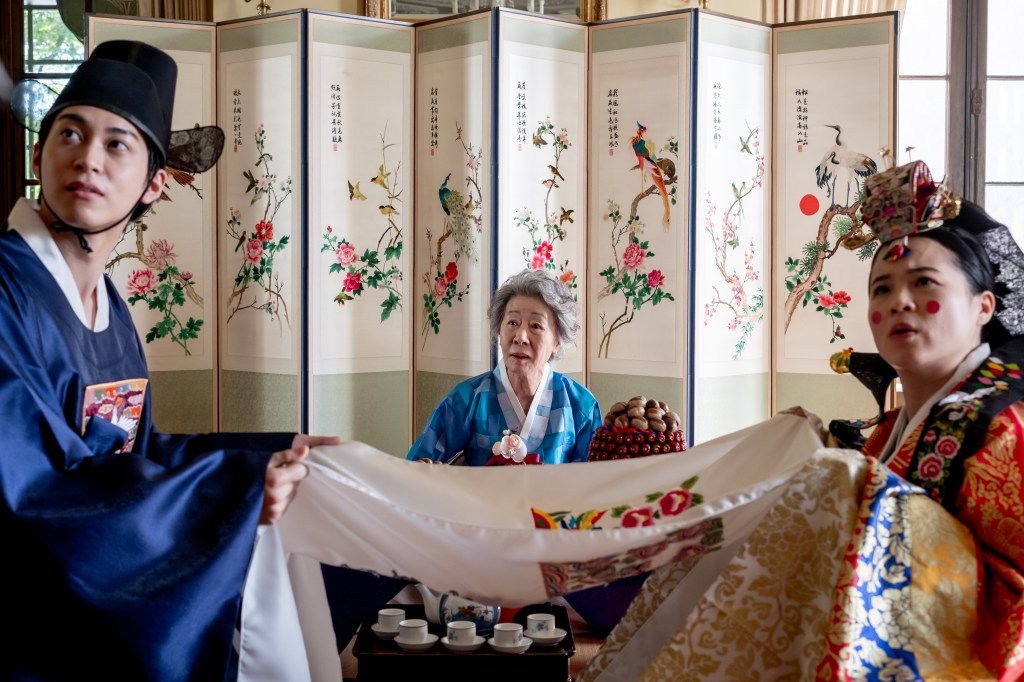
While it’s easy for some to want to compare the two films bar-for-bar, Ahn’s effort is more of an updated, modern, fresher spin on the found family story that focuses on a group of co-dependent Seattle queer friends as they try to navigate pregnancy and staging a fake Korean wedding ceremony for a rich, traditional grandmother who wants to keep up appearances. The film also stars some of the brightest queer and Asian talent in the industry, including Saturday Night Live’s Bowen Yang, Star Wars’ Kelly Marie Tran, Oscar-nominated Killers of the Flower Moon actress Lily Gladstone, and Where Your Eyes Linger’s Han Gi-chan, as well as acting legends Joan Chen (The Last Emperor, Didi) and Youn Yuh-jung (who won an Oscar for her role in Minari).
Gold Envelope got the chance to sit down for a one-on-one chat with Ahn about the creation of the film, and he talked all about how getting to work with a vibrant cast that includes Oscar-winning legends, showcasing Asian familial dynamics viewers have yet to see in Western media, the future of the found family genre, and much more!
Gold Envelope: There’s a whole generation of folks who probably haven’t even seen Ang Lee’s original film. Can you talk a little about the genesis and what made you want to bring this story to the world in this modern way?
Andrew Ahn: Ang Lee’s The Wedding Banquet was the first gay film I ever saw. The fact that it was a gay and Asian film, a film that holds much humanity. It really set the bar high and really influenced me as a person and as a filmmaker. I think I always understood from the beginning how my culture and my sexuality are interconnected. So it’s not surprising that my films have all been about this intersection.
I think I was very hesitant to reimagine this movie, but I could not deny how, like with so many movies that we love, it’s just so inspiring, and we can’t help but see how it connects to our own lives. Watching the original film again, I thought about all the conversations that I’ve had with my boyfriend about getting married, about weddings, about ritual, about growing our family, having children. So, because of how inspired I was to talk about these personal experiences I was having, it felt good to tackle the reimagining. It felt like I had a reason to do so. Selfishly, I also, because I’m Korean, wanted to show a Korean wedding in the movie. So instead of a Chinese cultural wedding, how about we have a Korean one?
I knew that we were updating things, because, you know, you had to. So much has changed for the queer community since 1993 but we were retaining the original film’s, philosophy of storytelling and prioritization of humanity that I really love about the original film and wanted to borrow for ours.

Bowen’s character, Chris, is really nuanced. I feel like a character like his isn’t shown a lot in queer media. Chris is obviously attracted to man, but then he also has no problem being with women. He’s on the sexuality spectrum, and that isn’t seen a lot, especially in an Asian character. Can you talk about fleshing him out and then having Bowen play him?
I was really interested in a character who has the burden of choice. This is a character that can get married now. This is a character that you know, like could go into academia, but also could just go and be a birder. This is a character that could date a man, but could also have sex with a woman. It’s this kind of millennial indecision. You have all these options now, but it’s almost like because you have so many options, you can’t take any of them. That’s something that I feel like is very relatable in this process of growing up. At the same time, I also wanted to show Chris as a caretaker, that he has a cousin that he has really cared for and has been using as a kind of a way to distract him from his own issues.
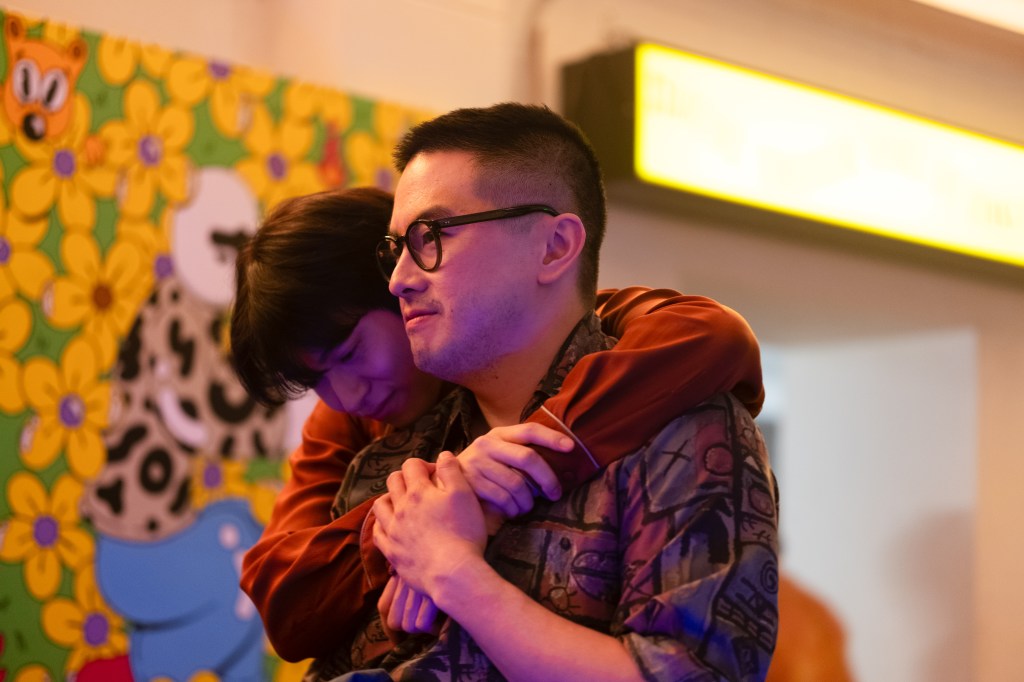
Chris is an amalgam of many friends of mine and so because of that, I knew in some ways that I wanted a friend of mine to play him. Bowen, obviously, from working with him on Fire Island, I just have a great relationship with him, and I find him so inspiring and and knew that he could really embody this character with a lot of humanity and a sense of texture. The video gaming and the Kingdom Hearts references, that’s all very inspired by Bowen being a gamer. I’m very thankful that he wanted to do it, and I hope I get to work with Bowen over and over and over again.
I also loved seeing the dynamic between Kelly Marie Trans’s character, Angela, and her mom May, played by Joan Chen. So often in queer cinema we see the opposite dynamic, where the parents are hateful or homophobic. But with Angela and her mom, it’s like she’s an ally to a fault where she makes it all about herself. Can you talk about that choice in crafting that dynamic between them and wanting to showcase a mother-daughter relationship style we don’t really see a lot at all. Joan Chen is an icon, by the way.
Joan is amazing. Joan is a legend. I was nervous that she might not want to play this part because she had already played the mother of a queer daughter in Saving Face, which is such a beautiful, iconic movie.
I wanted to show the kind of range of the queer experience now, and part of that is that we have parents who have very different attitudes around our sexuality, and that’s something that’s very different that you probably would not have seen much of. I’m sure it existed, but you didn’t see as often in 1993 is a mother that’s too accepting of her daughter, too excited about her gay daughter. For me, it’s all kind of metaphor for for parenting. May’s priorities are a little bit about herself, and she’s lost sight of the priorities of her daughter and centering her daughter in this campaign for equality. For me, it’s to show like that centering other people, to see and understand their humanity and their priorities, is an extremely difficult thing to do. Even the best of us like failed to do it, so it’s a reminder that this is a proactive process, that we have to focus on it, be aware of it, and that it’s not solved when you get an award. You know that it’s a lifelong thing, that you have to practice.

Love that. I could watch Joan Chen for hours.
I know, she’s great. I love her. Her comedy and drama in this film are like… so few actors could do that range. And she pulls it off so beautifully.
I know the found family genre, there’s years and years of it already at this point. But The Wedding Banquet gives viewers a fresh, modern take. Can you talk about crafting that dynamic, especially with four amazing icons like Bowen, Kelly, Lily, and Gi-chan. What was it like bringing it all together for this motley crew of this like hot mess family that I wish I was part of?
I knew writing the screenplay with James Schamus that the film would only succeed if by the end of watching the movie you felt like you wanted to be a part of this family. This ensemble was really important, and I worked very hard with our casting director, Jenny Jue, to pull together a group of people who not only fit these characters, but then also have a sense of generosity in their process and would gel together and would have fun together and be comfortable being messy together.
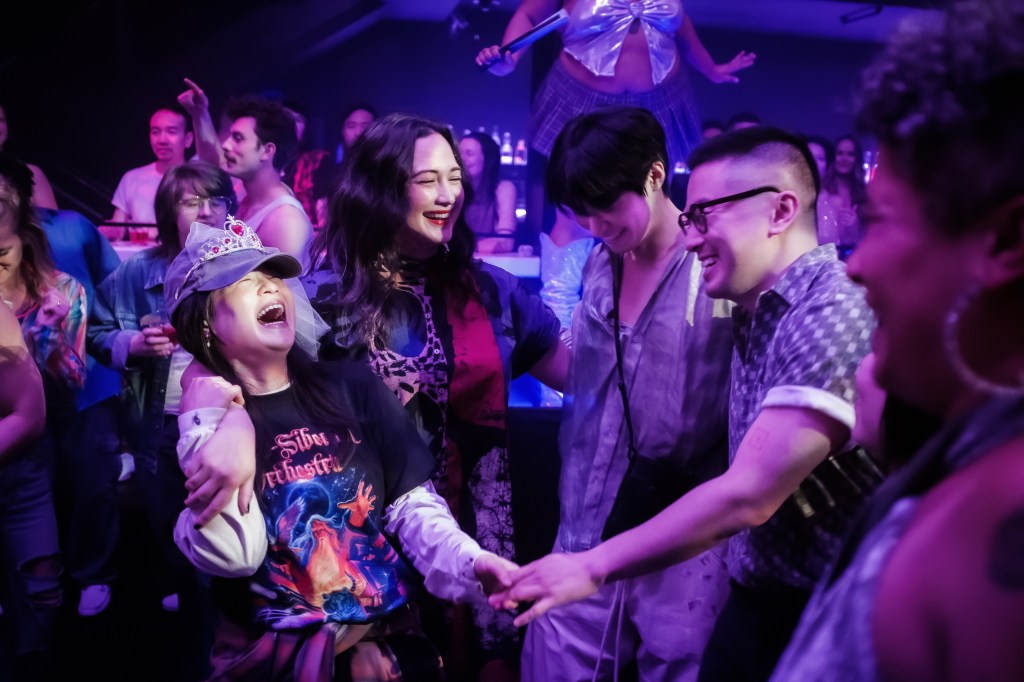
My past three films have been very specifically about chosen family, and it’s something that I think I’ll continue to talk about in my work. Maybe not as directly always as you know, these past few films. But you know, there was something about this one that I wanted to evolve it. How does chosen family become? How does chosen family become acknowledged by your biological family? How does it grow to include the next generation? It’s such an important part of our lives as queer people. I think as long as we can add layers to it in our storytelling, it’s it’s always going to be an interesting topic.
The Wedding Banquet is now playing in theaters.
Thanks for reading Gold Envelope! Subscribe to our Substack newsletter to keep up-to-date on all of our stories and to support our work!

 Gold Envelope
Leave a comment